

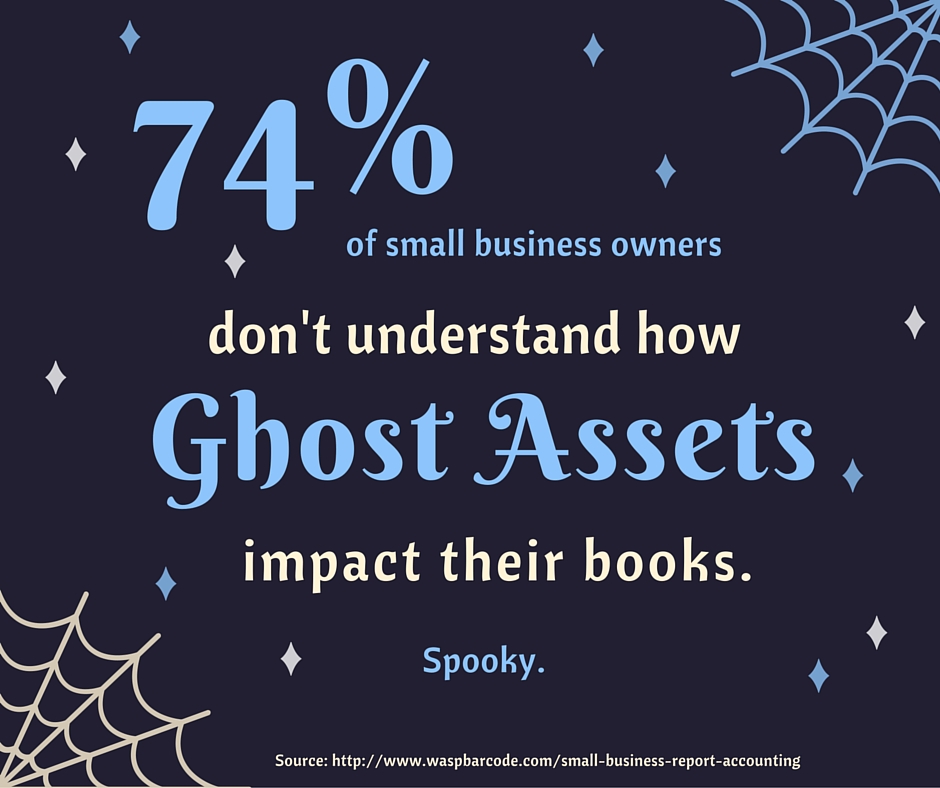
You probably don’t like ghosts lurking around your attic so you should definitely mind having them on your balance sheet.
But no need to call Scooby and the gang to solve this mystery! Your accountant or controller is all you need to hunt down ghost assets (aka the fixed assets that show up on your balance sheet but are M.I.A. I.R.L.). But they can’t do it alone! They’ll need your help to hunt down these financial spectres, especially if you’re outsourcing your accounting.
What are fixed assets?
Here’s the definition of a Fixed Asset from Indinero’s accounting glossary for business owners & CEOs:
Your fixed assets are things you purchase and intend to keep for a long time. Examples could be land or office space, furniture, office or manufacturing equipment, and some types of software.
Fixed assets are supplies and materials you use regularly to conduct business. When you account for these assets on your balance sheet you assign a value and, more importantly, a depreciation rate to account for the way they will lose value over time.
How Assets Become Ghosts
It may seem strange that major long-term assets like manufacturing equipment and computers would just disappear. But really, why does anything go missing?
- It gets lost
- It gets stolen
- It breaks/gets thrown out
- You sell it and forget to tell your accountant
These things happen all the time with non-assets, such as small admin office supplies like pens and pencils–not a huge deal most of the time. But when it happens with big ticket items, and your accountant doesn’t know, a missing asset can become a big blip on the balance sheet radar.
The Tax Implications of Ghost Assets
When you own an item that depreciates, its value decreases over time, which ends up affecting your taxable income. If you lose an item or sell it for less than it is worth at the time of sale, you’ll need to account for that loss (and deduct it on your taxes, yay!). However, if you sell an item for more than it is worth at the time of sale, you’ll need to account for the gain which will contribute to your overall tax position.
Example:
You buy a new computer for $1,500. Its projected lifespan is 5 years. That makes the depreciation rate $300/year. If after 3 years you sell it for $900 you’ve actually made $300 in profit based on the difference between the value that remains after depreciation ($600), and the amount you sold it for ($900). That $300 will go toward your tax position.

This is Why Communicating with Your Outsourced Accountant Is Key
Companies that have an internal controller can rely on them to track their inventory of fixed assets and be on the lookout for ghost assets that creep in the night. But your outsourced controller or CPA doesn’t always have the same physical visibility.
Get in the habit of maintaining an internal list of all your fixed assets and providing your outsourced accountant an updated version on a regular basis. This is the easiest way to let them know whenever you dispose, lose, or sell a fixed asset for any reason.
Now that wasn’t so spooky, was it? Knowing your accounting basics can add major value to your business and make you a smarter business owner (not to mention your CPA’s best client). For entrepreneur-friendly definitions of 100+ terms like the ones discussed in this post download your copy of Accounting Alphabet for Business Owners and CEOs (it’s free!):


